Why Every Contractor Website Needs Dedicated Service Pages
Learn why a single Services page costs contractors leads and rankings, and how to build dedicated service pages that attract the right local customers.
# Why Every Contractor Website Needs Dedicated Service Pages
Most contractor websites list every service on a single page — roofing, siding, gutters, decks, fencing — in one long block of text. It seems efficient. It is not.
That single "Services" page is costing you leads and killing your search visibility. Here is why, and exactly how to fix it.
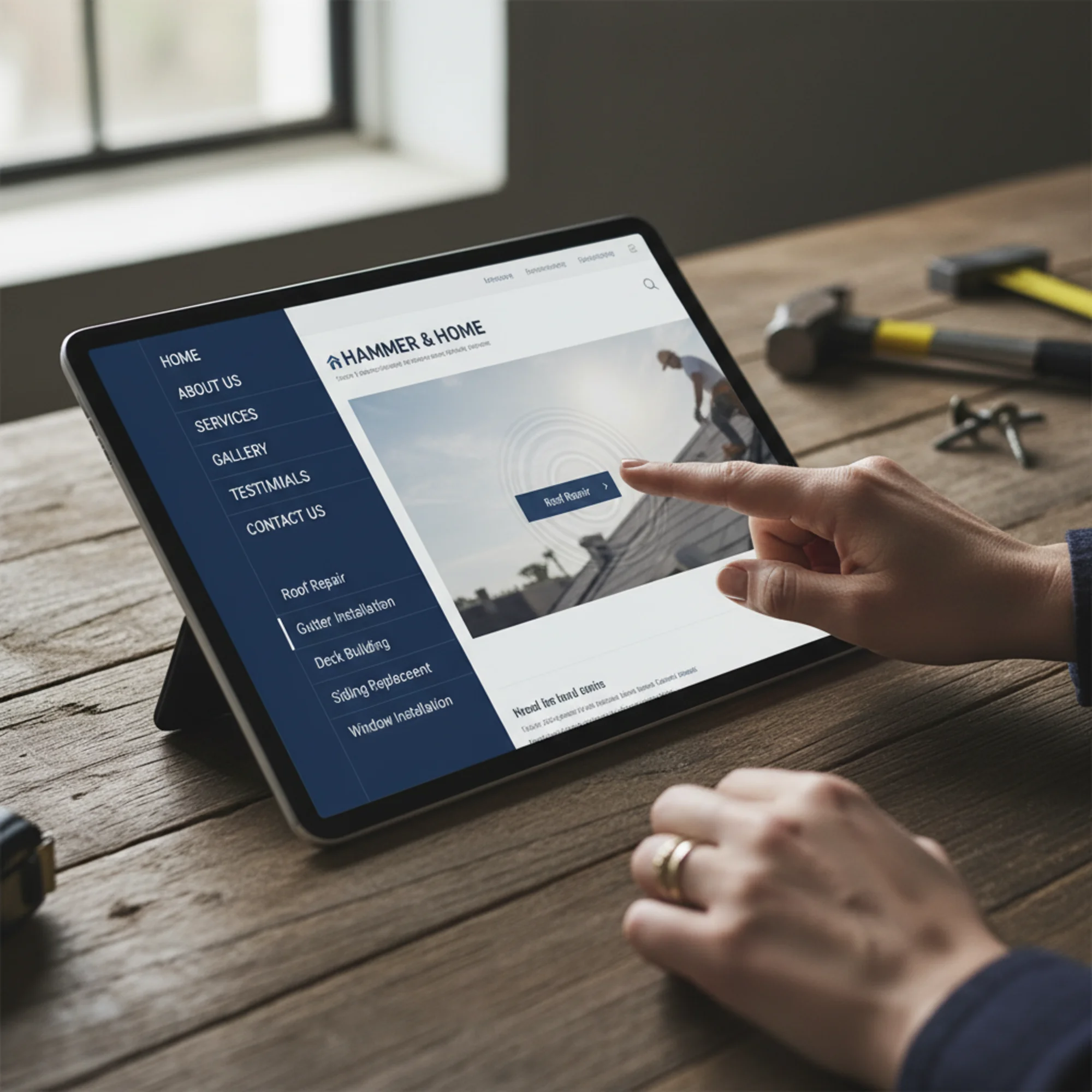
The Problem With One Big Services Page
When a homeowner searches "deck builder in Springfield," Google tries to find the most relevant page for that query. Your page titled "Our Services" that mentions decks in a bullet point alongside 14 other offerings does not look like the best answer.
A competitor with a page titled "Custom Deck Building in Springfield" — 800 words about their process, photos of completed decks, pricing guidance, and a contact form — wins that click every time.
Google's helpful content guidelines confirm this: content should demonstrate first-hand expertise and provide a satisfying experience for the person searching. A page that tries to cover everything covers nothing well.

What You Lose With a Single Page
Search visibility. Each service is a separate search opportunity. "Roof repair," "gutter installation," and "fence building" are different queries with different intent. One page cannot rank well for all of them.
Conversion rate. When someone lands on a generic services page after searching for a specific service, they have to hunt for the information they need. Most will hit the back button and call the next contractor.
Trust signals. A dedicated page lets you show relevant photos, service-specific testimonials, and details about your process. A bullet point on a list page does none of that.
Ad performance. If you run Google Ads, you need landing pages that match your ad copy. Sending a "roof repair" click to a generic services page wastes your ad spend.
What a Dedicated Service Page Actually Looks Like
A dedicated service page is a single page focused on one service, written for the specific person searching for that service in your area. Here is what belongs on each one.
The Essential Elements
A clear, specific headline. Not "Services" or "What We Do." Instead: "Roof Repair in Springfield, MO" or "Custom Deck Building — Kansas City Metro Area."
A short opening paragraph that states what you do, where you do it, and why the visitor should keep reading. Two to three sentences. No mission statements.
Your process, step by step. Homeowners want to know what happens after they call. Spell it out:
- You call or fill out the form
- We schedule a free on-site estimate within 48 hours
- You receive a written quote with materials and timeline
- We complete the work and do a final walkthrough together
Photos of your actual work. Not stock photos. Real projects you have completed. Before-and-after shots are especially effective. Smartphone photos of completed projects beat stock images every time.
Pricing guidance. You do not need exact prices. But giving ranges helps qualify leads and builds trust. "Most residential roof repairs in our area run between $300 and $1,500 depending on the scope" is more helpful than saying nothing.
Social proof. One or two testimonials from customers who hired you for this specific service. "They rebuilt our deck in four days and it looks incredible" on a deck building page is more persuasive than a generic five-star review.
A clear call to action. A contact form, phone number, or both — on every service page. Do not make visitors navigate somewhere else to get in touch.
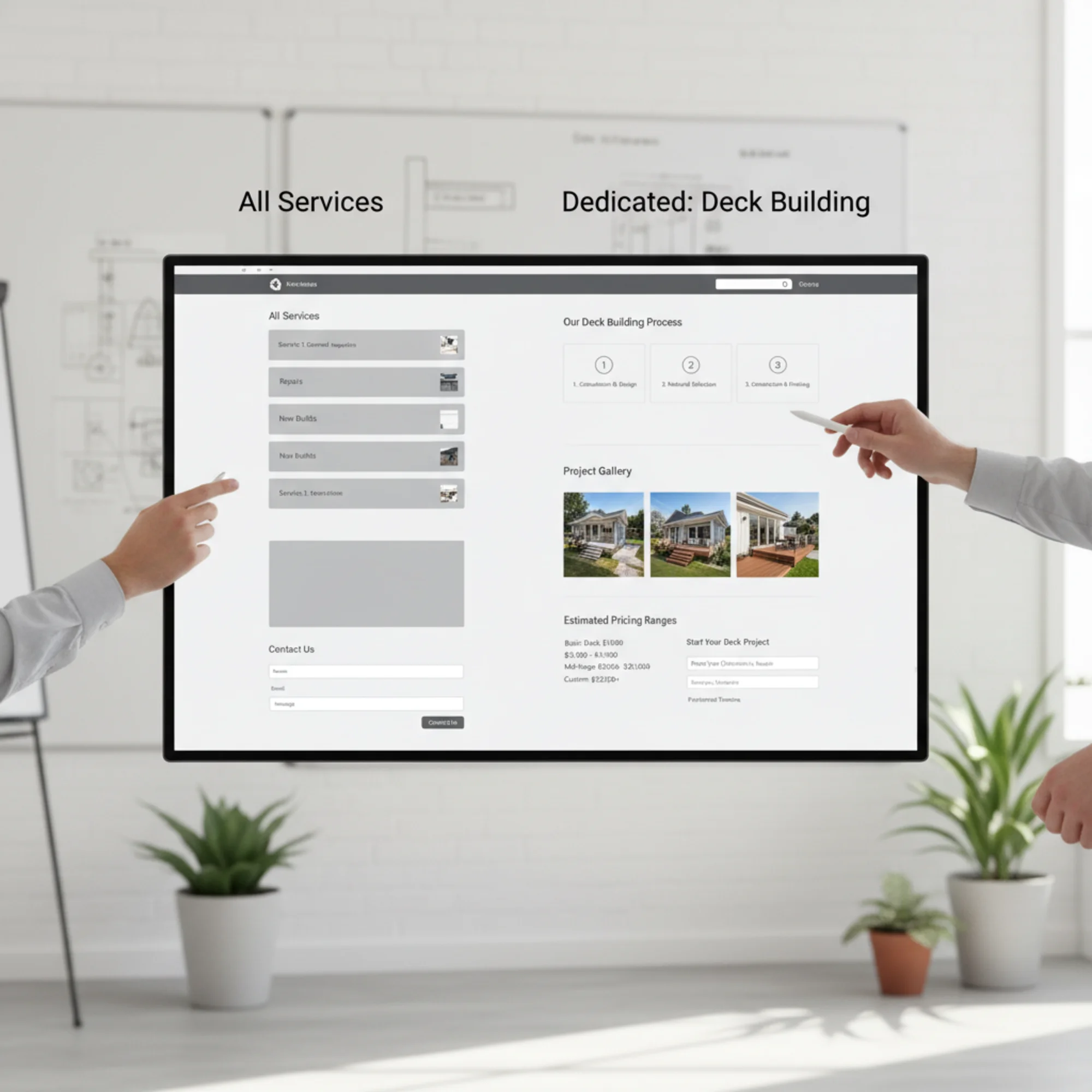
How Many Service Pages Do You Need?
Create a dedicated page for every service that meets two criteria:
- Someone could reasonably search for it on its own
- You want to be hired for it
For a general contractor, that might include:
- Roof repair and roof replacement
- Gutter installation and gutter cleaning
- Deck building, repair, and refinishing
- Fence installation
- Siding and window replacement
- Bathroom and kitchen remodeling
If you would create a separate line item on an estimate for it, it probably deserves its own page. Do not combine "deck building" and "deck repair" just because they both involve decks. Someone searching for deck repair has a different need, budget, and timeline than someone planning a new build.
Each page does not need to be a novel. Aim for 500 to 1,000 words. Specificity matters more than length.
Walkthrough: Building a Deck Service Page From Scratch
Let us walk through creating a dedicated service page for a fictional contractor, Summit Builders, based in Springfield, Missouri.
Step 1: Choose Your Target Keyword
Start with what homeowners actually search. For deck building in Springfield, the primary keyword is "deck builder Springfield MO." Related terms to weave in naturally: "custom deck construction," "composite decking," "deck building cost."
Think about what you would type into Google if you needed this service. That is your keyword.
Step 2: Write the Page
Title tag: Custom Deck Building in Springfield, MO | Summit Builders
H1: Custom Deck Building in Springfield
Opening paragraph: Summit Builders designs and builds custom decks for homes across the Springfield metro area. Whether you want a simple pressure-treated wood deck or a low-maintenance composite build, we handle the project from design through final inspection.
H2: Our Deck Building Process
Walk through the steps: initial call, on-site estimate, written quote, construction timeline, final walkthrough.
H2: Materials We Work With
Pressure-treated lumber, cedar, composite options — with pros and cons of each.
H2: What Does a New Deck Cost in Springfield?
Ranges: basic wood deck $15–$25 per square foot, composite $30–$50 per square foot, plus factors that affect pricing.
H2: Recent Deck Projects
Three to four photos with short descriptions of scope and materials.
H2: What Our Customers Say
Two testimonials specifically about deck projects.
H2: Get a Free Deck Estimate
Contact form with name, phone, email, and brief project description.
Step 3: Add Structured Data
Add LocalBusiness structured data to help Google understand your page. Include your business name, address, phone number, and service area. Google's structured data documentation explains the required format, and most website builders have plugins that handle this automatically.
Step 4: Link It Into Your Site
Add the new page to your main navigation under a "Services" dropdown. Link to it from your homepage, from related service pages ("Planning a new fence to complement your deck? See our fence installation page"), and from any blog posts about outdoor living projects.
Internal linking helps visitors find the page and helps Google understand how it fits into your site structure.
Common Objections
"I don't have time to write 10 service pages."
Start with your highest-revenue service. Build one page this week, another next week. In two months you will have a complete set. Each page takes one to two hours — you are explaining what you do every day, not writing a research paper.
"My website builder makes it hard to add pages."
Every modern builder — Squarespace, Wix, WordPress, GoDaddy — lets you add pages. If yours does not, that is a reason to switch platforms.
"Won't Google see it as thin content if each page is only 500 words?"
No. Google's helpful content guidelines are explicit: the goal is content created for people, demonstrating experience and expertise. A focused 500-word page about gutter installation that answers real questions outperforms a 3,000-word generic page that says nothing useful.
"My customers find me through referrals, not Google."
Referrals still check your website before calling. When a neighbor recommends you, the homeowner Googles your name. A professional deck building page with photos and testimonials converts that referral. A generic page gives them a reason to keep shopping.
Page Speed and Mobile Usability
Dedicated service pages only work if they load fast and display well on phones. More than half of local searches happen on mobile devices.
Key checks:
- Page load time. Aim for under three seconds. Compress images, skip auto-playing video backgrounds, and use reliable hosting. Google's Core Web Vitals measure real-world performance metrics like Largest Contentful Paint and Cumulative Layout Shift — slow pages get demoted in search results.
- Mobile layout. Your contact form must be easy to complete on a phone. Your phone number should be tappable. Text should be readable without zooming.
- Image optimization. Project photos look great, but a 4MB camera image will destroy your page speed. Resize to a maximum width of 1200 pixels and compress below 200KB before uploading.
Not sure how your pages perform? Run a free site audit with FreeSiteAudit to get a breakdown of your page speed, mobile usability, and the specific issues holding your site back. It takes under a minute and shows you exactly what to fix first.
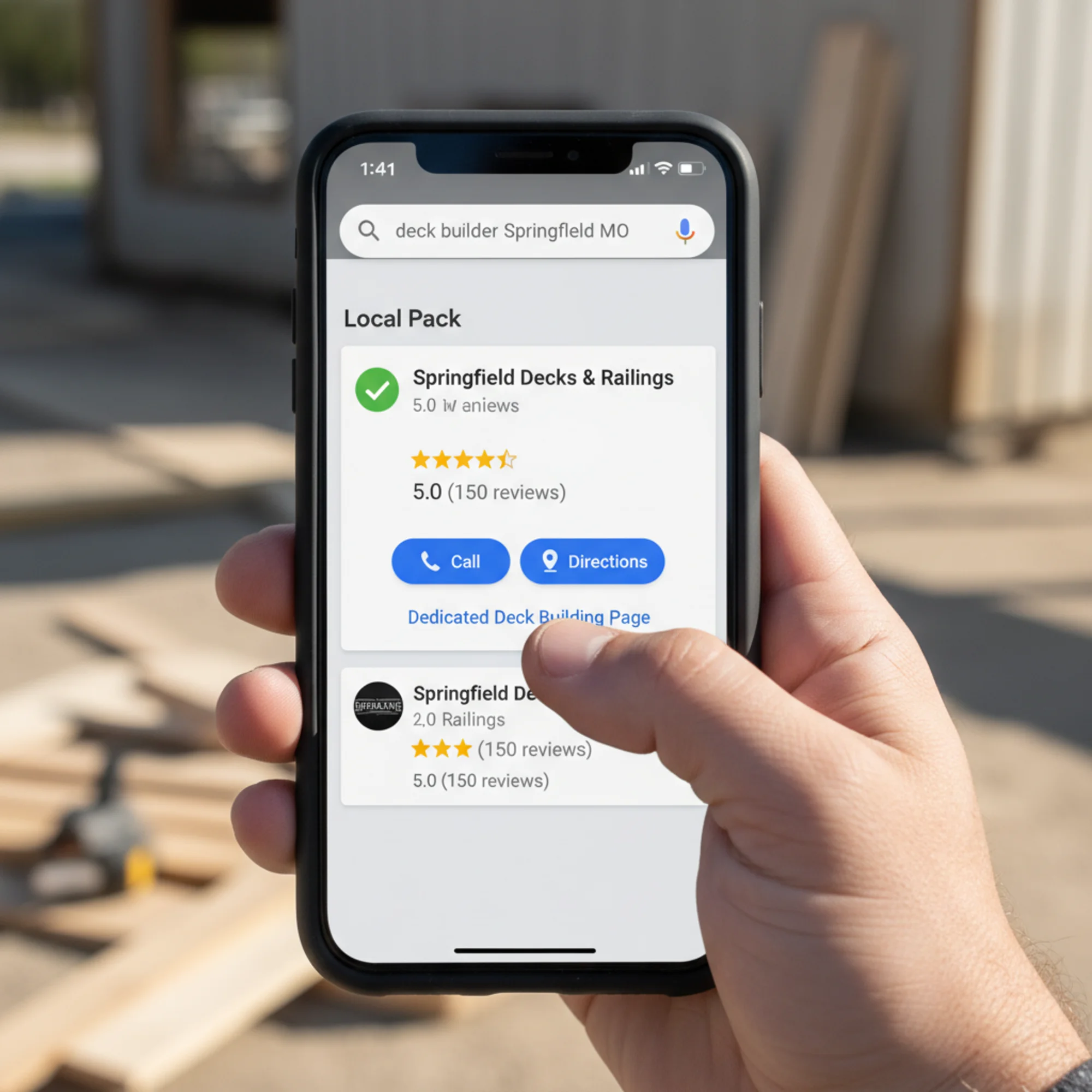
Quick-Start Checklist
Use this to build your first dedicated service page:
- [ ] Pick your highest-revenue or most-searched service
- [ ] Write a specific page title including the service and your city
- [ ] Write a two to three sentence opening stating what you do and where
- [ ] Describe your process in numbered steps
- [ ] Add at least three photos of completed projects for this service
- [ ] Include a pricing range or factors that affect cost
- [ ] Add one or two service-specific testimonials
- [ ] Place a contact form or phone number prominently on the page
- [ ] Compress all images to under 200KB each
- [ ] Test the page on your phone before publishing
- [ ] Link the new page from your navigation menu and homepage
- [ ] Add LocalBusiness structured data if your platform supports it
Repeat for each service. Highest-value services get pages first.
What to Expect After Launch
Google needs time to discover, crawl, and index new pages. Expect to see movement in search results within four to eight weeks for local service queries.
Over time you should notice:
- More specific inquiries. Instead of "I need some work done," you will hear "I saw your deck building page and want an estimate." These leads are warmer and closer to hiring.
- Higher conversion rates. Visitors who land on a page matching their exact need are more likely to contact you.
- Better search positions. For service-plus-location queries, a dedicated page will almost always outrank a generic services page.
- Less wasted time. Clear service descriptions and pricing guidance filter out callers who are not a fit.
The Bottom Line
Every service you offer is a chance to rank in search results, attract the right customer, and demonstrate expertise before anyone picks up the phone.
You do not need a marketing degree or a web developer. Explain what you do, show your work, and make it easy for people to contact you. One service, one page, one clear call to action. Start with one page this week.
If you want to see where your current site stands before building new pages, run a free audit with FreeSiteAudit. You will get a clear picture of your site's speed, mobile usability, and SEO fundamentals — so you know exactly what to prioritize.
Sources
Related Industries
Check your website for free
Get an instant score and your top 3 critical issues in under 60 seconds.
Get Your Free Audit →