FreeSiteAudit vs Ubersuggest: Which Tool Is Better for SMBs?
Compare FreeSiteAudit and Ubersuggest for small business websites. Learn which tool helps you fix site issues first and when keyword research matters most.
# FreeSiteAudit vs Ubersuggest: Which Tool Is Better for SMBs?
If you run a small business website, you've probably searched for tools to help you show up on Google and fix whatever's wrong with your site. Two names that come up a lot are FreeSiteAudit and Ubersuggest. They sound like they do similar things, but they're built for different jobs.
This guide breaks down what each tool does, where they overlap, and which one makes more sense depending on what you're trying to accomplish.

What Each Tool Actually Does
FreeSiteAudit is a website health checker. You type in your URL, and in under 60 seconds you get a 0-100 score across nine categories: SEO basics, page speed, mobile-friendliness, trust signals, schema markup, and more. No signup required. It pulls evidence from your actual pages and gives you a prioritized list of what to fix first.
Think of it like a checkup. It looks at what's wrong right now and tells you what to do about it.
Ubersuggest is an SEO toolset built by Neil Patel. It covers keyword research, competitor analysis, rank tracking, backlink monitoring, and site auditing. It offers a free tier with usage limits and paid plans for broader access to keyword and SEO data.
Think of it like a marketing research platform. It helps you figure out what topics to write about, what your competitors rank for, and how your keyword positions change over time.
Where They Overlap
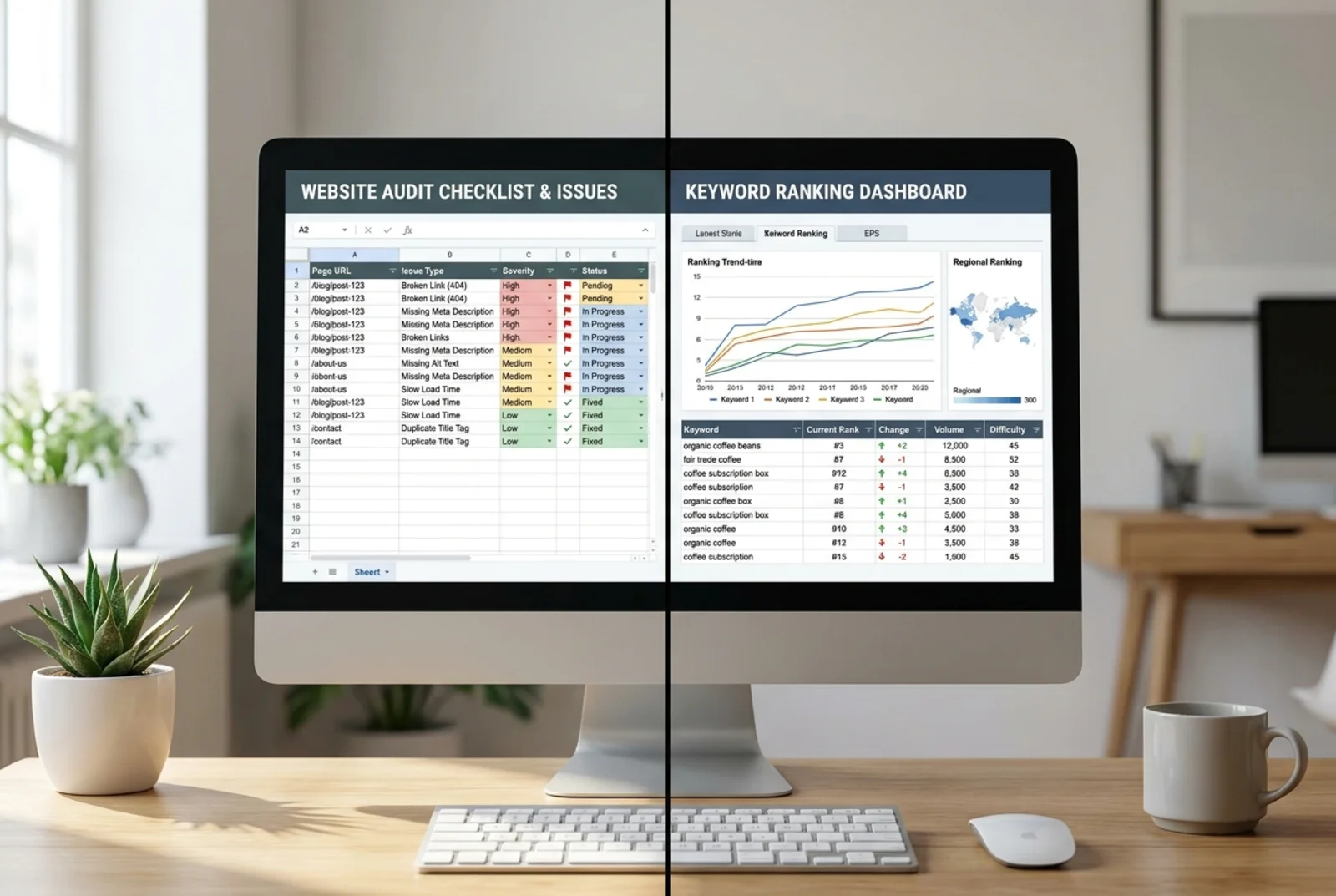
Both tools can look at your website and flag SEO problems. Ubersuggest has a site audit feature that crawls your pages and reports on technical issues. FreeSiteAudit does something similar but focuses on giving you a clear, scored snapshot with plain-language explanations.
Both will tell you things like:
- Whether your meta titles and descriptions are missing or too long
- If your pages load slowly
- Whether you have broken links or missing alt text
- Basic mobile usability issues
There's overlap in the "tell me what's broken on my site" department. But the way they deliver that information, and what they expect you to do with it, is different.
Where They Don't Overlap
Here's where the tools really diverge.

FreeSiteAudit focuses on fixing your site
FreeSiteAudit is purpose-built for one thing: helping you understand what's wrong with your website and what to fix first. It scores your site across categories like speed, SEO, mobile, trust, and schema markup. Each finding comes with specific evidence from your pages, not generic advice.
If your meta titles are poorly written, it shows you exactly which ones and why. If your site is slow, it tells you what's causing the delay. If you're missing trust signals, it flags that too.
The output is a prioritized action plan. You don't need to know SEO terminology to understand the report. That's the whole point.
Ubersuggest focuses on growing your traffic
Ubersuggest is built around keyword strategy and competitive intelligence. Its core strengths are:
- Keyword research: Find search terms people use to find businesses like yours, along with volume and difficulty estimates.
- Competitor analysis: See what keywords your competitors rank for and where you might have gaps.
- Rank tracking: Monitor how your positions change over time for specific keywords.
- Backlink data: See who links to your competitors and find link-building opportunities.
- Content ideas: Get topic suggestions based on what's performing well in your niche.
The site audit feature exists inside Ubersuggest, but it's one piece of a larger SEO research platform. It's not the main draw.
A Side-by-Side Comparison
| Feature | FreeSiteAudit | Ubersuggest |
|---|---|---|
| Website health score | Yes, 0-100 across 9 categories | Yes, via site audit module |
| Signup required | No | Yes (free tier available) |
| Time to first result | Under 60 seconds | Varies (crawl-based) |
| Keyword research | No | Yes |
| Competitor analysis | No | Yes |
| Rank tracking | No | Yes |
| Backlink analysis | No | Yes |
| Plain-language reports | Yes | Partial |
| Prioritized fix plan | Yes | No (lists issues by type) |
| Price | Free | Free tier with daily limits; paid plans available |
A Practical Scenario: Maria's Bakery Website
Let's say Maria runs a bakery in Austin. She has a website with her menu, hours, location, and a few blog posts about baking tips. She's not getting much traffic from Google and wants to figure out why.
If Maria uses FreeSiteAudit first, she'll get an instant snapshot of her site's health. Maybe she'll find out her pages load slowly on mobile, her meta descriptions are missing on several pages, she has no structured data for her local business, and her images aren't optimized. She gets a clear list of what to fix, ranked by impact. She can hand this to her web person or work through it herself using guides like our technical SEO fixes guide.
If Maria uses Ubersuggest first, she'll discover which bakery-related keywords people in her area are searching for, what her competitors rank for, and where there are content gaps she could fill. That's useful information for planning blog posts and landing pages.
But here's the thing: if Maria's site loads slowly and has broken meta tags, no amount of keyword research will help her rank. Google's own guidelines on creating helpful content emphasize that pages need to provide a good experience first. And Core Web Vitals like LCP, INP, and CLS directly affect how Google evaluates your pages.
The practical order for Maria: Fix the site first, then plan the content strategy. FreeSiteAudit for step one, Ubersuggest for step two.
Who Should Use FreeSiteAudit First
FreeSiteAudit is the better starting point if:
- You've never audited your site. You need to know what's broken before you can plan a strategy. A speed snapshot alone might reveal problems you didn't know existed.
- You're not technical. The plain-language reports explain issues without assuming you know what "render-blocking CSS" means.
- You want answers fast. No signup, no waiting for a crawl to finish. Type your URL and get results in under a minute.
- You need to hand off fixes. The prioritized report works well as a brief for a developer or freelancer. "Here's what's wrong, fix these five things first."
- You're on a tight budget. It's free. No trial period, no credit card.
Who Should Use Ubersuggest First
Ubersuggest is the better starting point if:
- Your site is already technically sound. If you've fixed the basics and your site loads fast, looks good on mobile, and has proper meta tags, you're ready to focus on traffic growth.
- You need keyword data. If you're planning blog content, landing pages, or ad campaigns, keyword research helps you target the right topics.
- You want to track rankings over time. Ubersuggest's rank tracking lets you monitor whether your SEO work is actually moving the needle.
- You're doing competitor research. If you want to see what's working for similar businesses in your space, Ubersuggest gives you that view.
- You're comfortable with SEO tools. Ubersuggest has a lot of features. If you're familiar with SEO concepts, you'll get more out of it.
When You Need Both
For most small businesses, the smartest move is to use both tools at different stages:
- Start with FreeSiteAudit to find and fix the technical problems on your site. Get your health score up. Make sure your pages load fast, your meta descriptions are written well, and your site works properly on phones.
- Then use Ubersuggest to research keywords, plan content, and track your rankings over time.
This isn't about one tool being "better." They solve different problems. A website audit tool tells you what's broken. A keyword research tool tells you what to write about. You need both, just not at the same time.

The Bottom Line
If you're a small business owner wondering where to start, start with your site's health. You can't rank well on a broken website. Run a free audit with FreeSiteAudit, fix the issues it finds, and then layer on keyword research with Ubersuggest or any other SEO tool you prefer.
The best tool is the one that helps you take the right next step. For most SMBs that haven't audited their site recently, that next step is understanding what's actually wrong.
Ready to see where your site stands? Run a free audit now and get your results in under 60 seconds. No signup needed.
Sources
Check your website for free
Get an instant score and your top 3 critical issues in under 60 seconds.
Get Your Free Audit →